

Control test and annual health check of cats – 2018
Why we do regular health checkups in our cats?
First of all, to have it under control. Cats, as any other animal – or human – can get sick. Even that from/in the best family and in perfect in perfect environment and conditions. The risk is greater with age. And our gets don’t get younger in time 🙁 Whisper has turned 10, Elma and Dziabąg are already 6, Cody has reached 3 and Helen became 5 years old last December. More about control checkups and their purpose was mentioned before and you can find it HERE.
Regular health checkups are crucial in proper care for cats. If any problem occurs – it’s important to catch it as early as possible and react on time. Thanks to that we can shorten time od treatment and significantly improve quality and life span. Because cats are not that easy to read even if there is something wrong with them. Being a good caretaker also means to pay attention to subtle details and do routine tests every once in a while.
This approach helped us to detect renal issues with Dziabąg (more about it HERE), who now – 3 years later is still doing very well. In the past year we also diagnosed Whisper with gastrointestinal lymphoma when it was in a very early stage (more about it in Cats health). With our other cats – regular controls let us sleep well.

FIV & FeLV tests
Every year we do control tests for feline leukemia virus (FeLV) and feline immunodeficiency virus (FIV). Both diseases are transmitted mostly by direct contact with sick cat – for ex. through mating, bites etc. It mostly regards stray and free roaming cats. It’s not as rare as you may think, what I can see at work.
Our cats don’t have contact with outside animals, so they don’t get the chance to catch any of above diseases. Even if we take them to the garden, it’s always under our supervision. So why do we still do those tests if we don’t worry about positive results? When we were starting the cattery, almost 10 years ago, there was a rule to do so. We got used to doing it so much, that even despite our organization don’t require it (but still recommends), we do it anyway every year.

FIV & FeLV test are important if a breeder uses another male from outside of his/hers own cattery. It’s to make sure that there is no chance for both male and female to get sick from that mating. For cattery without FIV/FeLV free status, there is no point of starting a conversation about outside mating (domestic or in another country). Of course, there is no problem to do this test right before mating. But what if then it somehow comes positive? While going to another cattery I want to be sure that it’s safe for my cats and that any tests are only to complete formality. That’s also why I do test as a routine, so that I can offer the same conditions. Anyway, we still get blood samples for health checks, so those two little drops for FIV & FeLV test don’t do any difference apart from financial. And we never spare money on cats.
Last time we did those tests in September 2019.
Once again, we’ve confirmed that Thai Cattery Viosna*PL was and remains free from
Feline Immunodeficiency Virus (FIV) and Feline Leukemia (FeLV)
Additionally, all our breeding cats are free from PRA*.
*Progressive Retinal Atrophy – genetic (inherited) disorder that leads to blindness.
Control health check up’s
September is a time when we test all our cats. Apart from that Whisper and Dziabąg have additional check up every 6 months. Since Whisper has finished her chemotherapy, she also has blood test run nearly every month.
Cody
In September all Cody’s blood results came back normal. We were happy, as we’ve had some troubles with him in July-August. We know his love for any ribbons, hair ties, strands and threads – which he tries to eat after playing with it. That’s why we don’t have such things left around the house. But as in the sleeping beauty fairytale – if something is supposed to happen, it will happen. Even if you burn all the spindles in the land.
Cody managed to open a closed hallway, climbed up the highest shelf (probably using drawers as stairs) where we keep boxes with Christmas stuff. Boxes are put so tight, that it’s hard to lift the covers while they’re in the closet. But our cat is so clever, that not only he managed to open the box. He also got a piece of ribbon (he didn’t take out the whole quill) and ate it. We only found out about it when he threw it up later. (Don’t ask how long it took us to figure out where he got it in the first place…)
We were not sure if he vomited the whole thing so run further diagnostics for foreign body. Contrasted X-ray was a bit disturbing, so we decided to do laparotomy in order to remove possible remains of the ribbon. Everything was during weekend, so we had to wait until Monday to run blood tests.

Blood results, along with ultrasound, revealed acute pancreatitis. Treatment took us a whole week until both Cody’s condition and blood parameters came back to normal. Luckily, we managed and there is a happy ending to this story. But believe me, when I say it was very hard for us. With my approach and panic tendency when it comes to my own cats, it was a really stressful period. That’s also why we were so happy when Cody’s results and ultrasound we did in August were ok.
Then in September we repeated everything as scheduled. Blood was ok, as I’ve mentioned on the beginning. Ultrasound also seemed ok. Liver, spleen, pancreas, kidneys and gastric tract were normal. But then in the urinary bladder we’ve spotted few little sediments. Urine test revealed only a slightly elevated pH, with no crystals or any other anomaly. It was nothing disturbing so far. Cody didn’t have any symptoms of urinating problems, didn’t miss the litter box or anything that might have been worrying. But we decided to do something to correct the pH which should be mild acid in cats. To alcaic/neutral pH can be followed by struvite stones. We didn’t want to see that happen. Because the cause of it is mostly diet, we did some modifications to it Then, we’ve repeated ultrasound and urine test after a month. pH was back to normal and there was no sediment seen in the bladder.
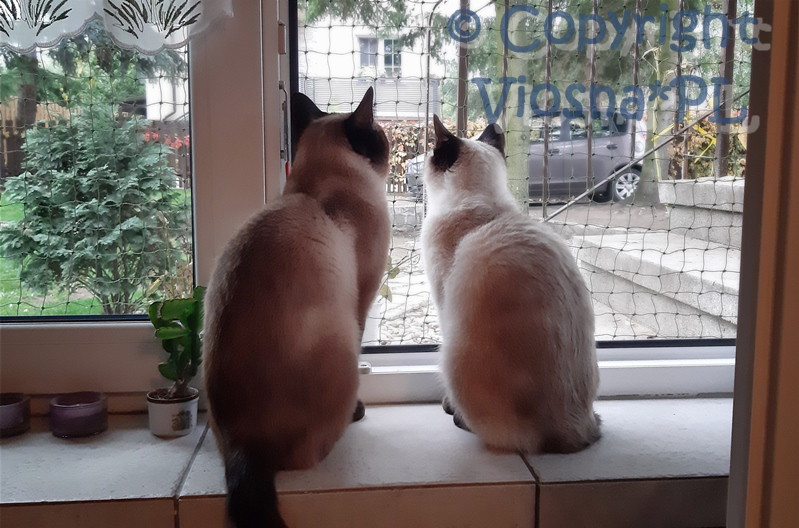
Elmirka
Elmas’ blood results were all normal. Urine test and ultrasound also didn’t show any abnormalities. Elma was healthy as a horse apart from one little detail. Unfortunately, despite oral cleansing we’ve done in April, the problem came back. She has some caudal stomatitis around premolars and molars of the upper jaw. We’ve considered additional treatment. We’ve assumed we are free to start, as she was experiencing some fertility issues after being blocked (about that you will read in my next post) for Whispers chemo. So, we did oral cleansing again and started her on interferon treatment.
Helen
Because Helen was pretty advanced with her pregnancy, we didn’t do all test with her. We decided to wait with that when she’s done raising her kitten. Ultrasound was more difficult as she had a pretty big baby in her belly. Luckily the little one was developing perfectly. His heartbeat was ok. He had quite a room just for himself in there and he used it to wriggle through all the examination.

Dziabąg
Dziabąg has his tests done every 6 months, as he has one kidney atrophy after sever cat flu he had back in Ukraine. His checkups are extended with blood pressure and wider blood panel. His BP remains within normal range, but we found something disturbing in his blood and urine results. Similar to Cody, pH was elevated but he also has singular struvite crystals found in urine. We’ve also noticed mild problems with urinating. Because of renal problems Dziabąg receives special kidney diet that may cause elevation in urine pH and may result in crystals formation.
In blood results creatinine and SDMA were elevated while 6 months later both were within normal range. Now SDMA was twice as high – it was 27 while norm is below 14! Creatinine was slightly elevated (167) above normal (140). If I was only to relay on blood results, I would have to say he has stage III kidney disease (there are 4). But we always say that we don’t treat results but patients. And Dziabągs clinical condition didn’t suggest that advanced problem. I have few chronic kidney disease patients under my care at work and I know a bit how this looks like with stage III.
I suspected that probable reason for that results might be urinary tract inflammation as a result of cystitis with developing struvite urolithiasis. So, we started treatment for that. Diet modification was a part of it.
Similar to Cody’s case, we repeated blood and urine tests after a month. There was great improvement in each of results. Creatinine was 124 and SDMA dropped to 10! 🙂
Whisper
Since we finished chemotherapy in July, Whisper had tests done in August and we also repeated it in September. All her blood and urine parameters were within normal range. We keep her on cobalamin supplementation as this tended to decrease when we didn’t. Ultrasound didn’t reveal any new changes that may suggest lymphoma recurrence. She was in a good mood and some hair were growing back on her belly. Her blood pressure was also ok.
With Whisper we do blood tests nearly every month to be able to catch any disturbances. We are aware that with gastrointestinal lymphoma remission is around 1,5-2 years. But I sleep better knowing that we are switched on in this case.
Back in April all our cats had oral cleansing under sedation done. All apart from Whisper who was in the middle of chemo back then. He teeth are not that bad, but we’ve noticed she tends to leave a little mess around the bowl. While I took a look in her mouth on left side, I’ve spotted moderate inflammation on her gums around premolars and molars. So, we decided to take care of this before we have another litter in the cattery. She is receiving interferon orally for some time now and tomorrow she will be sedated and have her teeth cleaned.
Late, in March, both Whisper and Dziabąg have their cardiological and ophthalmological consultation planned.
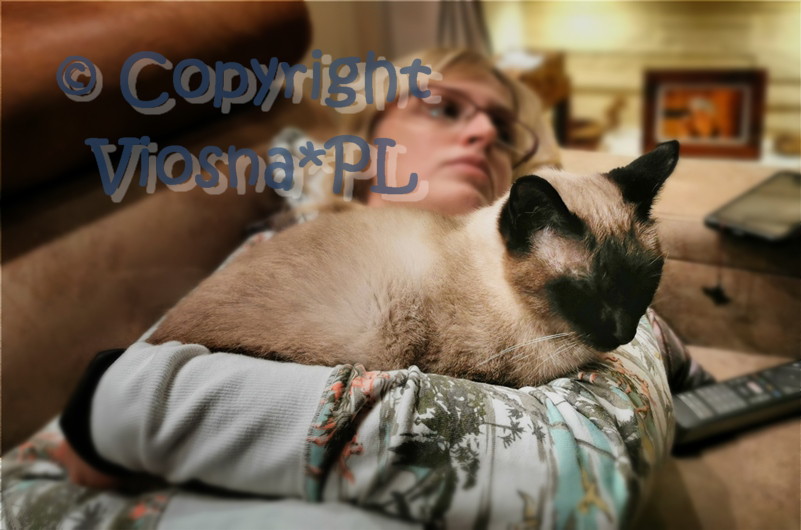
This post proves how important health checks are in cats. Maybe this is getting boring, but I don’t mind sounding like a broken record when it comes to prophylactics in felines. And this is because I can see its results in my patients. Many of them were diagnosed soon enough thanks to routine checkups. From what I hear from the owners, not only comfort of life has improved. Cats general wellbeing and behavior got better, activity and willing to play has increased. So, if you’ll notice any disturbing symptoms, even very mild or delicate, don’t hesitate to get your cat checked by a doctor. And if you think your cat is healthy and well, perform regular controls once in a while anyway.

