


Real breeder will never sell kittens by auction site (such as Allegro, Amazon, eBay etc). Some cat breeders clubs ex. PZF member of WCF forbid that to their members.
What you should ask before buying/selling a cat?
- In which association is the cattery registered? Is it a member of international World Cat Congress?
- When was the cattery registered?
- Which cats are parents to the kittens in the cattery? Where do they come from/where are they registered?
- Does the breeder take his/hers cats to be judged at an International Cat Show?
- What titles do parents of kittens have? (ex. Champion, International Champion)
- When were kitten parents on a cat show and who was the judge (for more familiar with cat shows – you can ask in which class the cats were shown, what note did they get etc.)
- Is it possible to see kittens pedigree or at least pedigrees of the parents?
- Is the cattery free from dangerous diseases FeLV and FIV?
- When was the last time the breeder tested cats for FIV and FeLV?
- Who is a vet taking care for the cats in cattery?
Associations existing for many years now in Poland – such as Polska Federacja Felinologiczna Felis Polonia, or Polski Związek Felinologiczny – share their cattery members list. These associations work under international clubs such as World Cat Federation or FIFE. On their international website you can find national associations list in particular countries.
Pedigrees given by the organisations above:
- show known ancestry of the kittens – back to 5th generation
- give you all the ancestors names along with their pedigree or registration numbers, show titles, EMS codes (for their race and colour)
- have symbols of national and international organisation that realized the pedigree
- have stamped mark, watermark and/or hologram preventing from copying and falsification.
If you are looking for thai cat in Poland – real Thai Catteries are members of PZF (you can check them here).
If you are a cat breeder – always ask to see pedigree before selling or buying a cat in Poland.
Do your research before completing transaction – for your, your cat sake and for other breeders.
What is a kitty mill these days?
That name was used for unregistered unit breeding cats and dogs that look alike a certain breed – animals without known ancestry or breeding law – doing it only for profit. In 2012 there was a change within Polish law, that forbid to sell non-breed animals (breeding is allowed, but selling not). Unfortunately along with that change a law gap was created that allowed kitty and puppy mills to become legal in Poland. All they needed to do was to register whichever association. Since the gap was discovered associations started to pop up like mushrooms and legalize kitty/puppy mills. Thanks to that they avoid the law that was suppose to prevent this. Now they legally cheat people and get profit from that. What’s more they contribute animal abuse and destroy many years of hard work of the real and committed breeders.
Today we have many associations that declare their pro animal goals but exist only to keep kitty mills running for money they can make out of it. These associations may have or have not their webpages, be social organisations, give their own quality certificates (no one knows on what basics) and their own “pedigrees” – all of those can be easily printed with any office printer anywhere. They call their members “breeders”, give them names… “Breeders” mostly don’t even have any webpage (but some do) and they usually sell pets by auction portals and advertisements. What’s more there is no kind of control so everything is done with minimum outlay which – as you can imagine – influences also health and attitude of the animals they sell.
How to recognize these associations and legal kitty mills?
Reason for their existence was the change in the law, that was made January 2012, so date of establishment for these “social organisations for animals” would be later than this. Often they give in their advertisements KRS number to authenticate their activity (KRS – National Register of Companies number). Real breeders from long existing organisations (like PZF – Polish Feline Association) don’t need to do that. Dishonest organisations rather avoid using word “breeder” in their name (but there are few exceptions) – they prefer “fancier”, “friend”, “lover” – still their activity is far from animal welfare. Of course word “purebred” in their name helps to more efficiently cheat and sell pets. Some of the associations register even “so called breeders” of species that they don’t put in their name. So you can find association for dog fanciers that has catteries members. As long as members contribute their money why should associations care what they do?
These dishonest organisations are not subjected to any laws and regulations, don’t meet international standards and don’t cooperate with any organisations out of the country (or within Poland). “Pedigrees” they give are far from good quality when it comes to paper, print and contents. But they try to improve the print, so be alert.
Law for animal walfare in Poland forbids to sell if ancestry is not documented. This is the law gap – if a kitty mill gets “pedigree” this is a document – even if all the ancestors except parents are unknown (or not even mentioned) and there is nothing in it or the names are siply made up. Purebred animals have known ancestry which is possible to check and it is written down in the pedigree and that’s the difference!
It doesn’t mean that only purebred animals are allowed to breed. Many mixed breed cats and dogs look beautiful and have wonderful attitude. Our pet cat – Dziabąg, can an excellent example. (He has such a positive temperament that he wins heart of everyone who comes to visit us. Plus you would not tell that he has any disability cuz he doesn’t show it.) The point is that reproducing animals without known parentage shouldn’t be called “breeding/cattery/dog kennel”. Cats which just look alike shouldn’t be called as a chosen purebred (on unjustified basis) and selling them as purebred cats is an ordinary phishing and fraud. Unfortunately former kitty mill use the law gap to make it legal and unaware future owner who got deceived, supports demand for this kind of practice.
Thanks to some hints and information it is possible not to get deceived and make sure that the cat we are trying to buy is a purebred and wasn’t born in former kitty mill that is legal now. Knowledge about registration of the cattery, some aspects of running it, ancestry of breeding cats and basic rules of taking care of cats should help to figure out who we are dealing with. (you can find example questions to ask the breeder on the left side of this article.) Usefull information is held by the pedigree, which should contain ancestors names from both parents. Honest breeder won’t have anything against showing you all these before selling you a cat.
Why breeding cats without known parentage has negative consequences?
In their advertisement kitty mills often declare good conditions, vaccinations etc. Many times they say that they are driven by their “love for animals”. Sometimes even it may turn out to be true. But there is still one question, “Why/What for?”.
If an animal has unknown origin – we don’t know its ancestors. Then it doesn’t matter if one of the parents has a real pedigree (or is after parents who had one) if the other one is completely unknown. The fact that offspring look like a certain breed, doesn’t mean it is a purebred cat. Both appearance and temperament may not meet breed standards at all. Cat can turn out to be aggressive, scared, anxious, pose a thread to children. We don’t know what genetic defects, predispositions for illness or flaws it has or can pass by to another generation. Such conduct is not only cheating the owner, but also harms the good name of the breed – develops its opinion on the basis of fake cats that don’t belong to this race at all. Another thing that bothers me as a breeder and zootechnician is a fact, that this also put at risk many years of work, achieved breeding progress and significantly impedes the improvement of the breed.
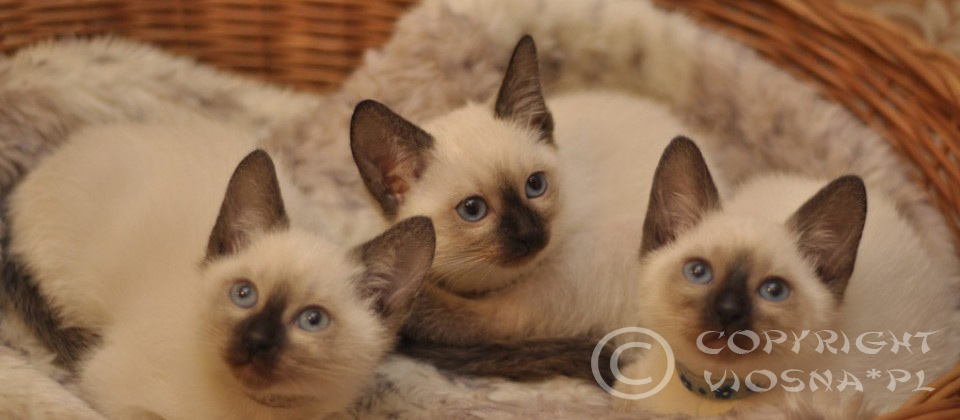
I don’t understand how can you sell cats on auction portals or other services, without any contact with the future owner? How can you say you love your cats while you have no idea where they will go? How can you declare that a cat is purebred while at first glace its appearance or appearance of its parents is far from breed standard. Point color doesn’t make any cat a purebred thai, siam, ragdoll or other with this color attribute. Certain breed is many aspects of not only appearance. Unfortunately most of legal kitty mills owners is ignorant about it and very often cannot tell one breed from another. When it comes to their own cats – they don’t know cause they don’t want to know, they don’t see cuz they refuse to see that even if their cat is really beautiful and nice it doesn’t mean it’s a purebred. If someone wants to handle cattery, at least do it properly. Get into the subject, broaden your knowledge, try to achieve something in breeding, not just acquire new kittens for sell. In the name of the rule “do something properly or not at all.”
Why do kitty mills breed animals?
When it comes to answering a question “why do kitty mills breed animals” it is simple as that – for money. As a vet doctor I cannot even speculate that they do it for the sake of their pets. Theory that “queen should have kittens at least once to be healthy” is false. There are no medical indications and benefits for this kind of practice. There are no positive effects for female from being pregnant “at least once”.
But there is a problem with newborn kitties that need homes. Very often it result in overpopulating animal shelters. Many “look alike” pets – given away because they didn’t meet someones expectations, were sick, had genetic defects, were aggressive or suffered from other behavioral issues. Kitty mills “breeders” learned to make profit out of selling sweet little kittens and they don’t care what happens to them when they are grown. (Sometimes they just get rid of animals that didn’t got sold in a certain age). After polish law was changed and they learned to use coexisting gap and became legal – they are even asking more money, sometimes close to or even same amount as real breeders. With much less expenses kitty mills just maximized their profit.
Why cats from kitty mills are cheaper?
Price of kittens is influenced by many things and these are not only expenses on food, veterinary care and kitten maintenance. Running cattery means also getting good cats for breeding, creating and keeping proper conditions for animals, well quality food, veterinary care and breeders’ hard work (it’s not true that animals “breed on their own”) and also costs of participation in cat shows, membership subscriptions and in the end – costs of pedigrees. Kittens from kitty mills – that didn’t have most of these costs, were always much cheaper that purebred cats. Unfortunately lately so-called-breeders greed is growing. So far kittens from such people costed a few hundred Polish zloty (1 USD ∼ 3,78 PLN, 1 € ∼4,23 PLN), while the renowned catteries offered kittens at a price from over a thousand to few thousands Polish zloty. Now many breed-look-alike cats can be found for similar prices as purebred cats. Usually there is not a single improvement for maintenance and cat breeding in kitty mills that goes along with price increase. That’s just a way to get much bigger profit with least costs. Of course the fact that cats may suffer and their living conditions are really poor doesn’t matter. This also influences many aspects of cats “quality” (health, appearance, attitude etc.)
As a vet doctor I often hear a statement from my clients that “breeder assured that the cat was dewormed” and it turns out that it has endoparasites. This can be a result of improper deworming or no deworming at all and “breeder” was just lying about it. Usually kittens have no vaccinations or have ‘some vaccination that don’t meet any rules of the right vaccinating programme. Many of them turn out sick as soon as they reach owners home. The fact that a cat has a health book doesn’t prove that it was taken care properly. What’s more some of kitty mills order health books via internet and mentioned procedures sometimes have nothing to do with a vet doctor at all – actually cats could have never been seen by a doctor.
Lowering costs at legal kitty mills are achieved by using cheapest food that may not be proper for cats age, health etc. Although they may say in their advertisements that they use the best food that there is. This applies as well for feeding kittens and adult cats, pregnant or lactating females. It may cause abnormal development, poor eating habits as well as many diseases even in older age. It’s sad that if those “breeders” don’t know how (or don’t want to know) to take good care for their animals, they won’t be able to give owners right informations and clues about that. At my work I often meet people sure that they take good care for their pets while they may cause them harm with some procedures and habits.
Legal kitty mills are also lowering costs by giving kittens away as soon as they start to feed on their own. It may have negative results for kittens phisical, mental and social development. Mother feeds her kittens for at least 8 weeks but they should stay with her a little bit longer than that. But kitty mills breeders sell them away at age of 7-8 weeks or even as soon as they start eating cat food (around 4 weeks). Most of those so-called-breeders doesn’t care where their cats go to after leaving kitty mills. Most important thing is to get rid of them as soon as possible at a lowest cost so they can get better profit. Being interested about the kitten fate ends when it is given to new owner, who is left alone with taking care for the cat for the rest of its life.
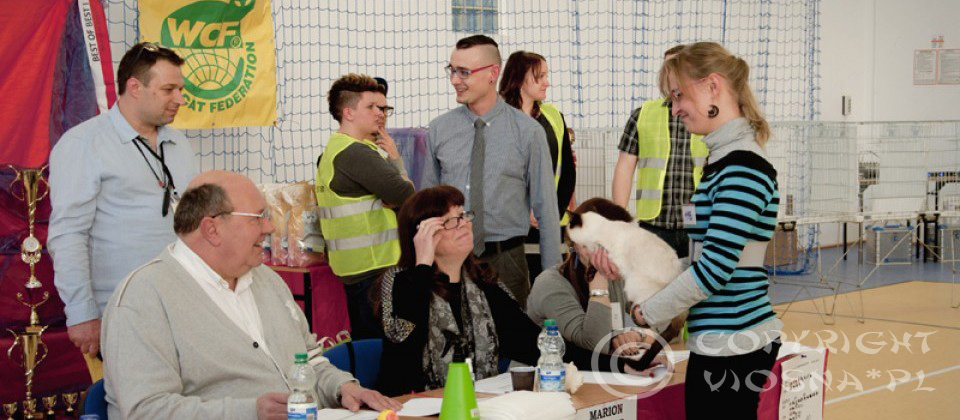
Legal kitty mills “breeders” don’t have any costs that true breeders have while participating in a cat show. Why? Because they don’t show their cats. Cat shows are not only for the purpose of showing cat to the audience. There are also qualified judges there, who evaluate all the present cats. They can control animals condition, check for some genetic defects or is check if the cat is good enough for breeding and if necessary withdraw a consent for reproduction. Particular titles are given to cats that meet the breed standard based on international judges opinion. Why should a kitty mill breeder go for a cat show if he knows that he doesn’t have a purebred cat and won’t meet the standards?
In any environment you can find a black sheep and sometimes even professional catteries registered in international organisations can be far from breeding standards. But this kind of risk is less probable than with kitty mills that are out of anyone’s control.
Not all kitty mills are drastic cases (that’s why it sometimes hard to tell who you’re dealing with), that you can find in the media (ex. intervention of Animal patrol in Wilanów, czy intervention of OTOZ in Tczew). Most of them just uses few animals and sometimes they can even have a decent living conditions. But there is still question for purpose of breeding non-breed animals. In animal shelters there is plenty of them so why multiply misery? Remaining unaware in this subject and lack of knowledge about breeding is not an excuse. Regardelss of the “love for animals” and kitty mills breeders ignorance – fraud is still a fraud. It’s just sad that this is a scam legal in the name of polish law…
author: lek. wet. inż. zoot. Karolina Kijek
Cupyrights
© Viosna*PL

